


![Flowers and Plants Toxic to Dogs: What Every Pet Parent Needs to Know [With Photos]](https://nycdogadventures.com/wp-content/uploads/2026/03/FullSizeRender-2-1-150x150.jpeg)






Here’s something you didn’t know you needed: Virginia Bluebells are an ephemeral wildflower native to Eastern North America, popping up for a short, magical window each spring before the trees leaf out. Whether you’re exploring Virginia state parks or strolling through NYC’s Central Park, these sky-blue blooms are impossible to miss—and yes, your pup can join too! We’re sharing the best dog-friendly Virginia Bluebells Bloom Schedule: Best Pet-Friendly Spots in the Northeast, bloom timing, and pro tips to make the most of your visit with your dog!



Where to See Virginia Bluebells (Dog-Friendly Edition)
💙 Virginia State Parks
- Bull Run Park, VA – The largest field of Virginia Bluebells in the world! Perfect for spring dog walks and photography.
- Shenandoah State River Park, VA – Captured in full bloom on 4/7/23. Trails are accessible for pups, but call ahead for leash rules.
- Edith J. Carrier Arboretum & Botanical Gardens, JMU, VA – Their wildflower garden is bustling with life and color, including Virginia Bluebells (Mertensia virginica).
Pro Tip: Virginia Bluebells grow along rivers and in moist woodlands. Call ahead to ask for bloom locations and pet policies.
💙 NYC Dog-Friendly Sightings
- Central Park, Manhattan – Found throughout the park, currently in full bloom as of yesterday!
- Pet Tip: Keep dogs on leash in high-traffic areas and stick to paths to protect these fragile wildflowers.
💙 NYC Spots Beyond Central Park


- Inwood Hill Park (Manhattan)
- Hidden woodlands along the northern tip of Manhattan
- Great for early spring hikes with dogs
- Look along trails near the park’s streams for clusters of bluebells
- Fort Tryon Park (Manhattan)
- Near The Heather Garden and wooded slopes
- Less crowded than Central Park, beautiful for peaceful walks and photos
- Van Cortlandt Park (Bronx)
- Trails along the Bronx River are ideal for finding wild bluebells
- Dogs are allowed on leash, making it a perfect nature escape
- Wave Hill (Bronx, public gardens)
- Their woodland garden often features Virginia Bluebells
- Dogs are allowed in certain areas on leash—call ahead for current pet policy
- Prospect Park (Brooklyn)
- Particularly along the Ravine area, a moist woodland section of the park
- Keep your pup on leash to protect the fragile blooms
- Pelham Bay Park (Bronx)
- NYC’s largest park has wooded trails along the Hutchinson River
- Bluebells can often be found in moist, shaded areas
🌱 Quick Tips for NYC Bluebell Hunts:
- Look in shaded, moist woodland areas or near rivers/streams
- Best bloom time: mid-to-late April, sometimes early May
- Keep dogs leashed to protect flowers and other wildlife
- Weekdays or early mornings are best for fewer crowds and better photo ops
🌱 Virginia Bluebells Facts
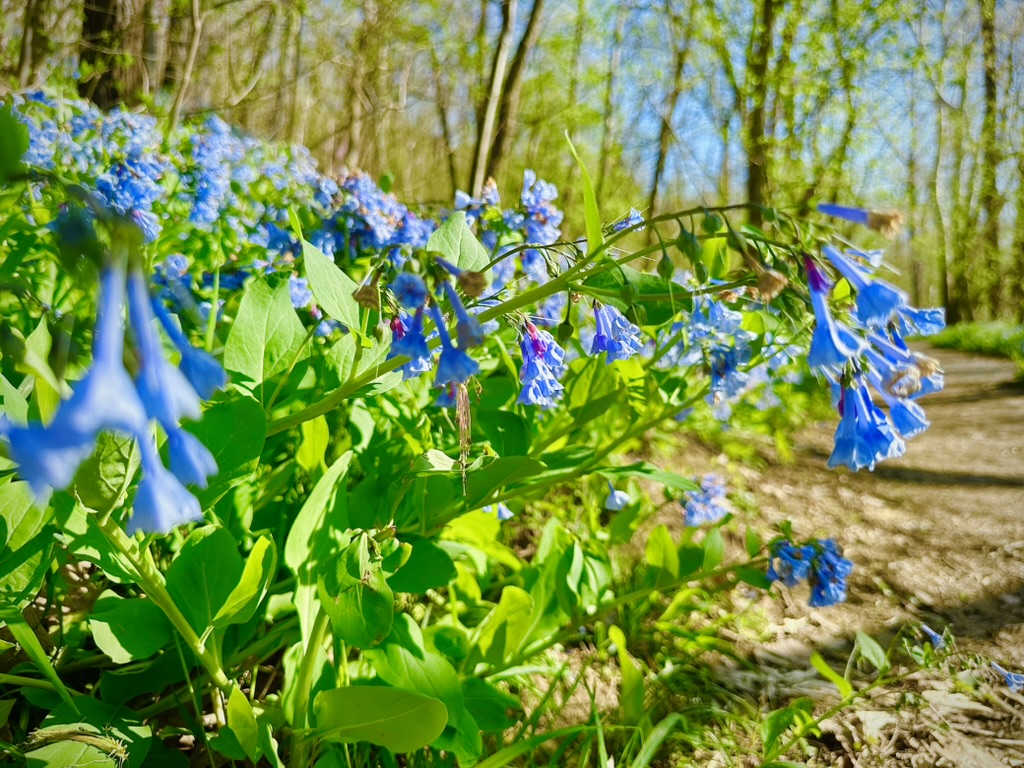
Scientific Name: Mertensia virginica
Bloom Season: Early spring, before trees leaf out
Habitat: Moist woodlands, floodplains, river edges
Range: NY → MN west, AR → NC south
NYC Presence: Central Park and other riverside spots
Eco Reminder: Respect nature—stay on trails, avoid picking flowers, and leave no trace.
Signs of bluebell poisoning in dogs
Bluebells are poisonous to dogs because they contain a toxin that affects the heart. Bluebell poisoning will normally result in an upset tummy, but if eaten in very large amounts, it can be fatal.
Bluebells are often found in woodland areas, so remember to keep an eye on your dog during walks to make sure they do not eat anything they shouldn’t.
You may not know that your dog has eaten a poisonous plant until they show symptoms. Getting to know the symptoms of plant poisoning can help you spot the signs quickly.
All bluebell varieties, including native, Spanish and hybrid bluebells, are considered toxic for dogs. Although bluebells are usually blue, you might come across a range of other colours such as white, pink and even grey bluebells. These plants are also poisonous to dogs and you shouldn’t allow your pet to sniff them, as irresistible as these breath-taking flowers might be.
If you suspect your dog has gotten too close to bluebells on the daily walk, monitor them closely in the next few hours in case any unusual signs show up. The most common symptoms of bluebell poisoning include:
- Diarrhoea
- Vomiting
- Abdominal pain
- Drooling
- Trembling
- Reduced heart rate
- Lethargy
Even skin irritation can be a side effect if your dog has mingled with the flowers, so look out for any abnormal rashes too. For more information on skin allergies in dogs, check out our easy guide.
If you notice any of these symptoms, don’t hesitate to call your vet.
Dog-Friendly Adventure Tips
- Call parks for bloom status & dog rules
- Bring water and waste bags for your pup
- Snap photos early morning for soft light & fewer crowds
- Avoid trampling wildflowers—use trails only
You’ll also love this
- FREE Shakespeare in the Park With Your Dog Is Back This Week—And It Might Be NYC’s Most Magical Summer Night Out

- Bushwick Collective Block Party 2026: Dog-Friendly NYC Street Art Festival Guide

- Hidden Waterfalls in Central Park: The Most Magical NYC Escape You’ve Probably Walked Past

- Flowers and Plants Toxic to Dogs: What Every Pet Parent Needs to Know [With Photos]

- NYC’s Only Dog Beach Is Hidden Inside Brooklyn’s Most Famous Park — And It’s the Ultimate Summer Spot for All Dogs!

- Chipin Dog Guide: The Perfect Small Dog for NYC Apartment Living & Travel

- The Best Parks in New York City for Dogs (Off-Leash info & Scenic Trails)

- 5 Days in New Orleans with a Dog—Here’s What We’d Do Again (and Skip)